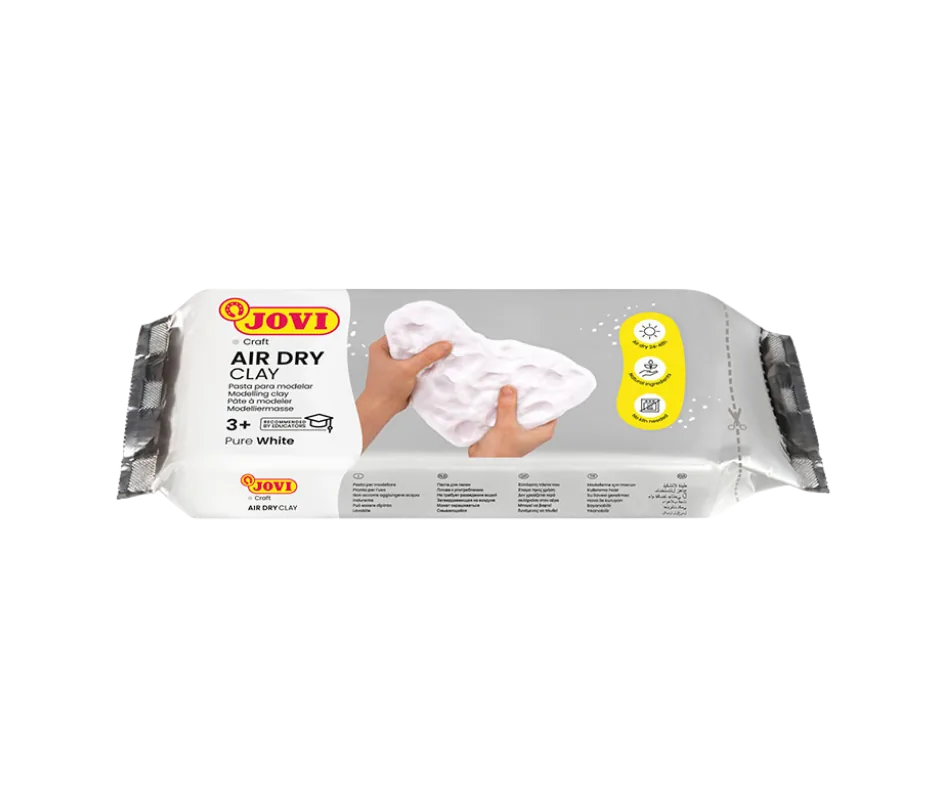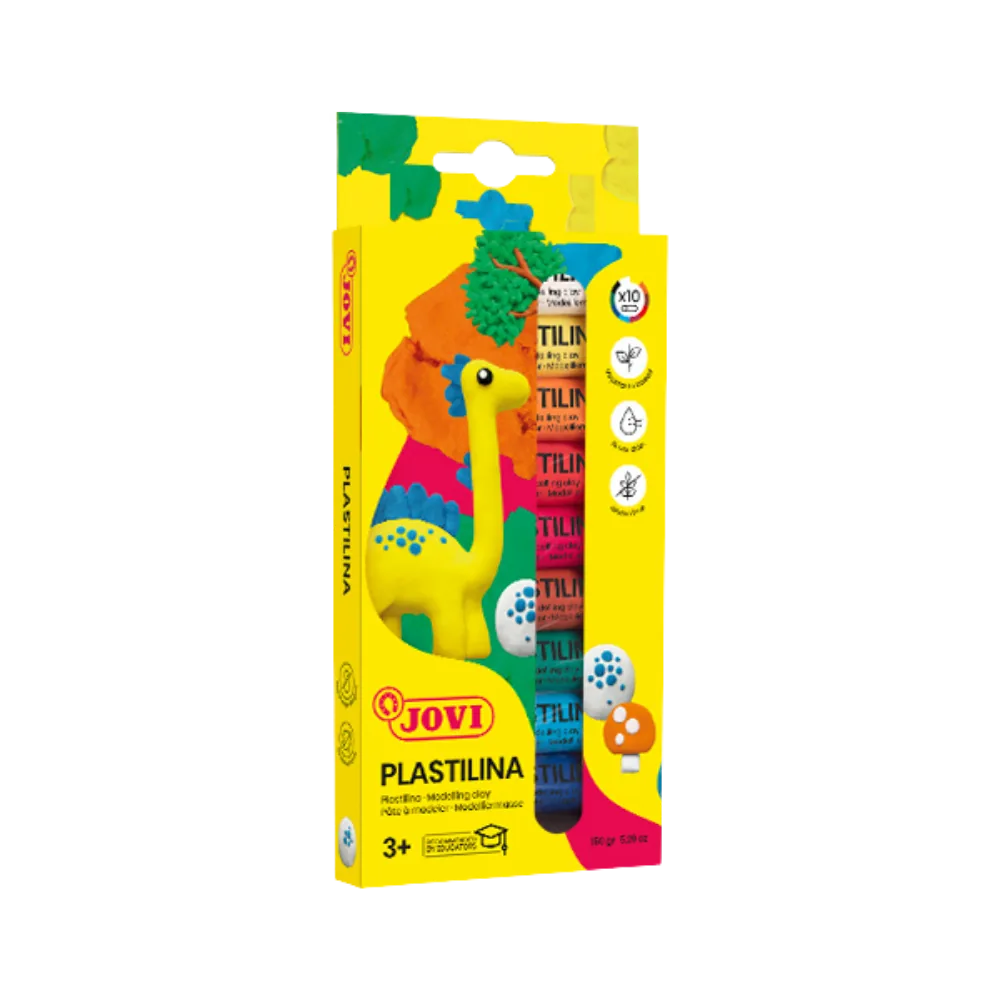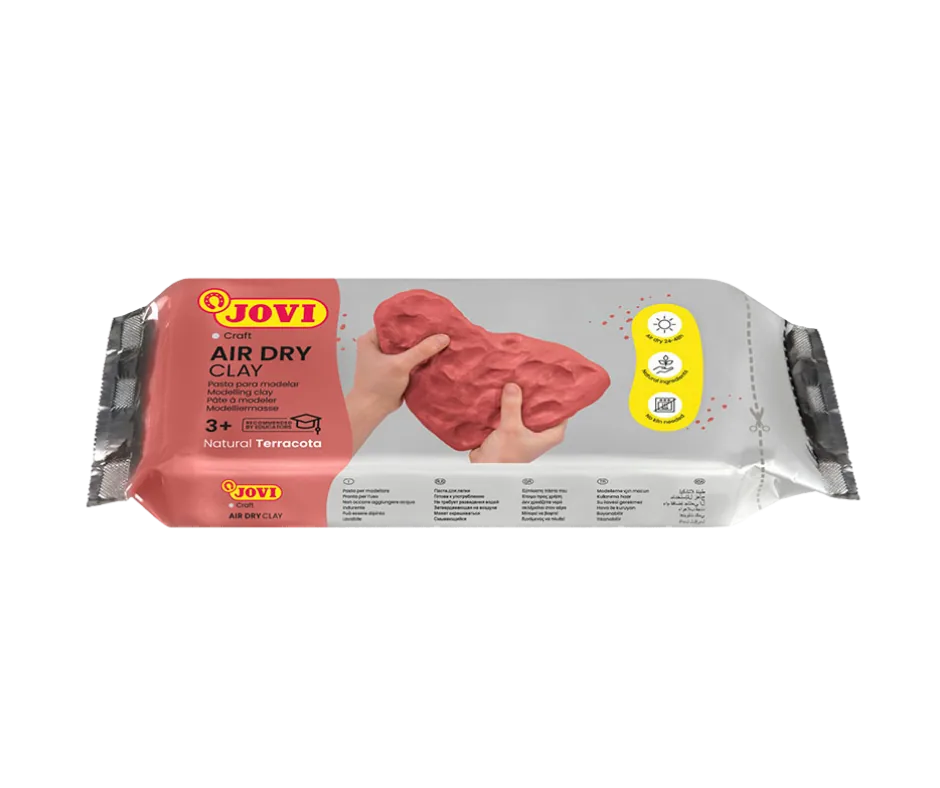

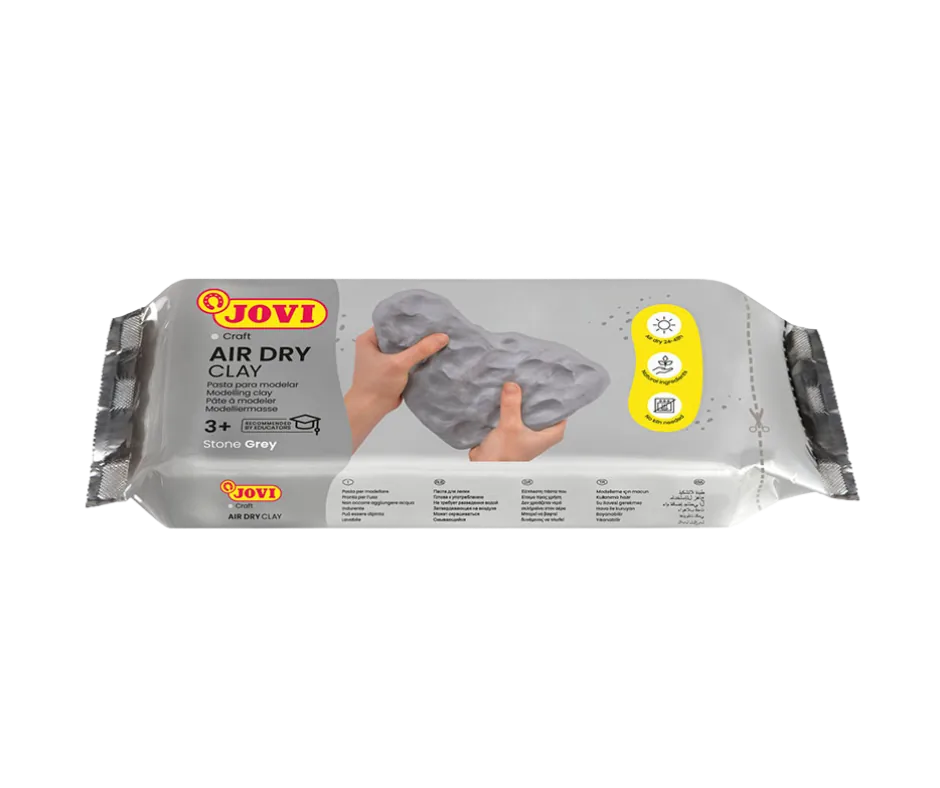
Every JOVI product sold in Malaysia carries a row of small printed marks — CE, EN71, sometimes ASTM D-4236. Parents see them, schools demand them for JPN audits, but few people can explain what each one actually tests for. This article explains them plainly — what they cover, what they don't, and what to look for when comparing clay or plastilina brands in a Malaysian retail shelf or marketplace listing.
CE — what it actually means
The CE marking ("Conformité Européenne") is the manufacturer's self-declaration that the product complies with all relevant European Union health, safety and environmental directives. For a children's modelling product, the relevant directive is the Toy Safety Directive 2009/48/EC.
CE itself is not a test — it is the legal statement that the product passes the tests required by the underlying EU directive. The actual tests for toys are defined by the EN71 series of standards (below). Without EN71 results, CE marking on a toy product is unverifiable. If a brand shows CE but cannot produce an EN71 certificate, treat that as a red flag.
EN71 — the actual safety tests
EN71 is a series of standards published by CEN (European Committee for Standardization) that define how toy safety is tested. The three parts that matter most for modelling products are:
EN71-1 — Mechanical and physical properties
Tests for sharp edges, small parts (choking hazards), strength of seams, length of cords, and so on. For clay and plastilina specifically, this covers the consistency of the paste (it must not break into hard fragments that a child could choke on) and the structural integrity of the packaging.
EN71-2 — Flammability
Tests how the product reacts to flame. Clay and plastilina inherently do not burn easily because of their water and oil content, but the standard formally certifies this so schools can rely on the material in classroom settings near hot lamps or kilns.
EN71-3 — Migration of certain elements
This is the most important one for parents. EN71-3 tests for migration of 19 heavy metals and chemical elements — including lead, mercury, cadmium, arsenic, chromium, antimony, barium, and several others — from the toy material into a child's body, simulating what happens if a child puts the product in their mouth (which they will, no matter how many times you tell them not to).
For JOVI Air Dry Clay and Plastilina, every batch is tested by an independent EU laboratory and the certificate filed with the regulator. JM Brands holds the latest test certificates and can email them on request for school JPN audits, Cambridge IGCSE audits, or IB Diploma art-department compliance.
ASTM D-4236 — the US standard
ASTM D-4236 is the American standard practice for labelling art materials for chronic health hazards, administered by the Art & Creative Materials Institute (ACMI). It is roughly equivalent to EN71-3 in spirit but with slightly different test thresholds and a different label format ("AP Non-Toxic" or "CL — caution labels required").
JOVI Air Dry Clay carries ASTM D-4236 in addition to EN71/CE — useful because some Malaysian international schools (especially American-curriculum schools) accept ASTM as their audit standard, and Cambridge IGCSE art departments sometimes ask for both as belt-and-braces compliance.
What's NOT covered by any of these
These standards do not test for:
- Common allergens — gluten, dairy, soya, nuts. (JOVI is independently certified gluten-free and free from major allergens, but this is a separate test).
- Long-term skin sensitisation — repeated daily contact across years.
- Performance claims like "dries in 24 hours", "never dries out", "non-cracking" — these are marketing claims, not regulatory ones.
- Halal status — for that, look for a separate JAKIM or international halal mark. JOVI is plant-based and animal-product-free but does not carry a formal JAKIM halal certificate.
What to ask for when comparing brands
If you are evaluating a clay or plastilina brand other than JOVI — whether for home use, school bulk pricing, or a retail buying decision — these are the questions to put to the supplier in writing:
- Can you email the EN71-3 test report from an EU-accredited laboratory, dated within the last 12 months?
- Is the CE marking matched by a Declaration of Conformity referencing the Toy Safety Directive 2009/48/EC?
- What is the manufacturing country? Many "European-style" clays are sold under European-sounding brand names but manufactured in factories that do not test to EN71.
- What is the minimum age rating and does it match the product's intended use?
- Are there allergen statements — gluten, nuts, dairy — printed on the pack or filed separately?
A reputable importer (such as JM Brands for JOVI) will be able to send all of this in a single email reply. A flag should go up if the seller can only provide marketing material rather than test certificates.
Why this matters in a Malaysian context
In Malaysia, the modelling-clay shelf at Daiso, Mr DIY, Popular and the Shopee marketplace is dominated by cheaper imports — many of which fail EN71-3 when tested. Studies by Spanish, German and French consumer-protection bodies have repeatedly found heavy-metal exceedances in clay products imported from factories that produce for the lowest-bidder export channel.
JOVI is on the other end of this market — made in Spain to EU standards, tested by an EU lab every batch, sold here by an importer (JM Brands Sdn Bhd) that holds the test certificates locally. The price is higher than the cheapest options on Shopee. The trade-off is that what you are buying for your child or your classroom has been independently tested for heavy metals.
If you are buying for a school under KSSR PSV, an international school under Cambridge IGCSE or IB, or as a parent for home use — ask for the certificate. Tanah liat kering udara JOVI dan plastisin JOVI come with one. Many alternatives don't.
Need a copy of the current JOVI test certificates for a school audit or trade evaluation? Email [email protected] or WhatsApp +60 13-606 7062 — we reply within one working day.
Is JOVI Air Dry Clay non-toxic and safe for kids?
Yes — every JOVI product carries CE marking and EN71 certification (covering EN71-1 mechanical, EN71-2 flammability, and EN71-3 chemical migration of 19 heavy metals). JOVI Air Dry Clay additionally carries ASTM D-4236, the US art-materials safety standard. Suitable for ages 3+ with adult supervision and 7+ for independent use.
Can I get a copy of the EN71 test certificate for a school audit?
Yes — JM Brands holds the current test certificates for each batch we import. Email [email protected] or WhatsApp +60 13-606 7062 with your school name and we will send the latest certificates as PDF within one working day.
Is JOVI halal certified?
JOVI is plant-based (the plastilina is 100% vegetable-based; the air dry clay is water and natural minerals) and contains no animal-derived ingredients, but it does not currently carry a formal JAKIM halal certificate. If your school or institution requires JAKIM specifically, please ask us and we can provide our manufacturer’s ingredient statement for your auditor.
What’s the difference between EN71 and ASTM D-4236?
EN71 is the European Toy Safety Standard — tests for mechanical hazards, flammability, and chemical migration of 19 elements. ASTM D-4236 is the US standard for art materials specifically — tests for chronic health hazards from art-supply ingredients, with a slightly different methodology. JOVI Air Dry Clay carries both, which is why it is accepted by Malaysian international schools using either Cambridge IGCSE or American-curriculum audit frameworks.
How do I tell if a competitor’s clay is safe?
Ask the seller to email you (a) the EN71-3 test report from an EU-accredited laboratory dated within the last 12 months, (b) the CE Declaration of Conformity referencing the Toy Safety Directive 2009/48/EC, and (c) the country of manufacture. A reputable importer can reply with all three within a working day. If they can only provide marketing material, treat that as a warning sign.